Blog Feed

Until The Two Become One (Must read, by Ken Rank)

Following is a terrific article by Ken Rank explaining the Two Stick Prophecy of Ezekiel 37, a passage that is largely overlooked by theologians in its significance.


Until the Two Become One

by Ken Rank

What the herders did not see before them was their brother. In fact, before Joseph finally reveals himself to his brothers, they had spent at least many hours with him, dining, being entertained, and also being berated and yet they saw only an Egyptian. To anyone who joseph-brothersmight have been standing at a distance, looking upon Joseph and that family of herders, being able to see that they were family would likely have been impossible.

The Prophet Ezekiel gives us a similar end-time picture in that we have two players who might just as well stand in such contrast. In chapter 37, verse 16, where we read the following:

“And you, son of man, take a stick and write on it, For Judah and for his companions, the sons of Israel. And take another stick and write on it, For Joseph, the stick of Ephraim, and all the house of Israel, his companions.”

What is easy to miss in the above verse is that Ezekiel takes two blank sticks that represent people and he is to identify who the two sticks are. The first he determines as Judah and those who are joined with Judah. The second stick is said to be for Joseph, but a stick that is Ephraim, and it includes the House of Israel and those joined to Israel. So we have a lot going on in this one verse. Most scholars believe that these two sticks represent the Whole House of Jacob, what was once a great nation that divided into two Kingdoms, Judah and Israel. But why the use of those names?  Continue reading at United2Restore

Did Israel sanctify pagan altars?

image

Or, did Yehovah command them to destroy the altars and NOT approach Him as the pagans approached their gods?  Can we take pagan practices and “Christianize” them?  If so, why don’t we use temple prostitutes?  If not, why do we insist on evergreens, balls, wreaths, eggs and bunnies?

Please.  Do the serious research.  “Christmas” was around 1500 years before Messiah Yeshua was born…

http://bible.com/100/deu.12.30-31.NASB

Prophesying to the Dry Bones…

Shema line 1 Shema line 2

Ez. 37 The hand of the Lord was upon me, and He brought me out [a]by the Spirit of the Lord and set me down in the middle of IMG_20151205_073732866_HDRthe valley; and it was full of bones. He caused me to pass among them round about, and behold, there were very many on the surface of the valley; and lo, they were very dry. He said to me, “Son of man, can these bones live?” And I answered, “O Lord [b]God, You know.” Again He said to me, “Prophesy over these bones and say to them, ‘O dry bones, HEAR [shema; שְׁמַע ] the word of the Lord. Thus says the Lord God to these bones, ‘Behold, I will cause [c]breath to enter you that you may come to life. I will put sinews on you, make flesh grow back on you, cover you with skin and put breath in you that you may come alive; and you will know that I am the Lord.’”

Last Shabbat, I posted a quick note about a global praying of the Shema asked for by a Rabbi on behalf of Judah and the need for the Mashiach to be revealed.  In that post I stated that in addition to being a prayer, Continue reading “Prophesying to the Dry Bones…”

Fifty steps from terror

In May, Kelly and I had the special opportunity to spend a few days in Jerusalem.  On a brilliant Wednesday afternoon, after lunch at the Quarter Cafe in the Old City along with our small group, we slipped into the world famous Shorashim Shop where the proprietor, Orthodox Jew Moshe Kempinski, locked us in, told us to grab a stool while he put on a small headset.  He then spend about 20 minutes telling us, ‘I know who you are…’ as he acknowledged our coming to Torah and a clear understanding of who Ephraim is, etc…  I remember my eyeballs sweating a good bit as he told us how much he loved us and looked forward to our rising as a fulfillment of prophecy.shorashim_biblical_shop1

Moshe and the Shorashim Shop have had a special place in my heart ever since.

Each week the Shop sends out a newsletter with Torah notes, thoughts, adverts and a few relevant articles from around the web.  This week, one article in particular hit me as I could picture every detail of the location of a terror attack.  We stood in these very locations a few short months ago Continue reading “Fifty steps from terror”

Difficult verses in the ‘Christmas’ story, p.4

in the beginningIn the beginning was the Word, and the Word was with God, and the Word was God. He was in the beginning with God. All things came into being through Him, and apart from Him nothing came into being that has come into being. In Him was life, and the life was the Light of men.

No reading of the ‘Christmas’ story is complete without John 1, yet these verses pose a sizable challenge to Christian theology if we stop and really take a look at them.

Have you ever considered the implication of these verses?  Jesus, or by His Hebrew name, Yeshua, was with God in the beginning and was (is) God.  Easy, right?  Not so fast, my friend!

What are the implications of the Messiah being present from the beginning? Continue reading “Difficult verses in the ‘Christmas’ story, p.4”

Global Reading of Shema Prayer Announced for Monday

Yesterday, I received an email alerting me to a global initiative to pray the Shema at 9 p.m. Jerusalem time (2 p.m. Eastern Standard Time).  I encourage readers here to participate in solidarity with Brother Judah as we call on the Holy One of Israel.

IMG_20150520_090553276A personal note on the Shema:  while this is a recitation of Scripture and a declaration of our Elohim (God), this has also become a commandment that I make into the spiritual realm that surrounds me as I declare to All Israel to Shema, HEAR!!  As often as you pray/declare the Shema, remember that you are making a statement to All Israel and the spiritual realm around you as well as our King hears and presses this forward to the ears of those yet deaf!

Here is a link to the article on Breaking Israel News:

Global Reading of Shema Prayer Announced for Monday Amid Growing Crisis Around World

Difficult verses in the ‘Christmas’ story… p.2

Yesterday, we began a short series considering some verses from the ‘Christmas’ story that challenge the traditional theological narrative of Christendom.  As I implied yesterday, these verses should pique our interest in a search for truth.  I don’t know about you, but I don’t care what men say, I want to see what Scripture says….


Thy Kingdom Come

When someone talks about the Millennial Kingdom or the future eternal Kingdom, what comes to mind?  Whose Kingdom is it?  Who rules over it?  Who was it promised to?  Who Messiah throneactually gets it?  Etc….  At the end of the Book of Revelation, what does the Kingdom look like and who is in it?

Scripture gives a very unified story that often does not match the narrative I was taught growing up.  At least, the focus I heard in church was quite different than what Scripture says.

A beloved part of the ‘Christmas’ story is the angel’s visit to Mary.  Here is part of the encounter and a difficult verse.

Gabriel, a messenger of God, visited Miriam (Mary’s real Hebrew name) and said,

Luke 1:31 And behold, you will conceive in your womb and bear a son, and you shall name Him Jesus (Hebrew = Yeshua). 32 He will be great and will be called the Son of the Most High; and the Lord God will give Him the throne of His father David; 33 and He will reign over the house of Jacob forever, and His kingdom will have no end.”

Here, the messenger Gabriel affirms multiple prophecies that seem to get lost in the Christian perspectives of this promised Kingdom.  This Son of the Most High will,

  • sit on the throne of David,
  • reign over the house of Jacob (aka, Israel),
  • forever.

What surprises many when they dig into these verses is that they lead directly to Ezekiel 37, a chapter most are at least partly familiar with.  The first part of the chapter is Ezekiel’s vision of dry bones that leads to the mid part of the chapter on the two stick prophecy followed by a detailed account of this Kingdom the Messiah will rule over.  Those shocking closing verses say, Continue reading “Difficult verses in the ‘Christmas’ story… p.2”

Difficult verses in the ‘Christmas’ story, p.1

This is the time of year when most of Christendom is focused on the advent of the Messiah of Israel, commonly called Christmas and the birth of Jesus Christ.  In churches and in homes Scriptures from the Old and New Testament will be read that detail the coming of the Long Expected One.  Most of us have heard these verses so many times that they almost flow off of our tongues as they are being read to us…  We know the flow and the rhythm to the point that they offer incredible comfort.  A halcyon warmth embraces us and we float on the river of sweet memories and blessed promises.  But, do we really pay attention?

Have you ever noticed that there are some verses in these beloved Scriptures that really really challenge the historical understanding of the story and at times confront even major tenets in the theological narrative of Christendom?  Over the next week I hope to explore a few of these difficult verses, not to be antagonistic, but to ask, ‘shouldn’t we look a little deeper, and through an Hebraic lens, to understand the context of Scripture and rightly understand who we are in the Messiah?’  Please take a few minutes and ‘walk with me’ as we consider some of these verses over the next few days.


Blameless

Christendom generally teaches that the Law (Torah, God’s Instructions) was too heavy a burden for people to bear and since nobody could keep it this created the need for Jesus to come ‘fulfill’ it for us.  Then, we read in the ‘Christmas story,’

Luke 1:There was in the days of Herod, the king of Judaea, a certain priest named Zacharias, of the course of Abia: and his wife was of the daughters of Aaron, and her name was Elisabeth. And they were both righteous before God, walking in all the commandments and ordinances of the Lord blameless.

Have you ever noticed that last bolded phrase?  Continue reading “Difficult verses in the ‘Christmas’ story, p.1”

Ephraim’s Shifting Paradigm by Ken Rank

Good friend and fellow sojourner, Ken Rank of United2Restore, has written a terrific article that sums up a lot of history and the quandary that Christendom is in as they try to reach the Jews.  But maybe, just maybe, we’ve been looking at this all wrong because we have used the wrong lens (paradigm) to understand Scripture.

This is a terrific read that is well worth your time and may challenge your thought process in several important ways!  Enjoy!


Ephraim’s Shifting Paradigm

Category Ephraim

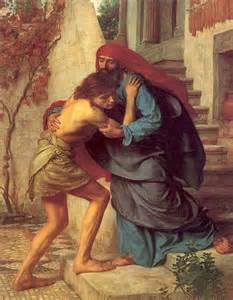
Most historians believe that a good solid understanding of history is the best guide in terms of understanding the future. History often stands as a beacon of things to come because humanity has not always prodigal sonexcelled at not repeating its mistakes. And so it has been between Christian/Jewish relations for the last 2000 years. Where these two peoples should stand more united against their common foes, they remain at odds usually over poor conclusions, bad definitions, and false assumptions. This has been a two –sided coin in terms of fault, but it also might be safe to say that the coin lands on one side more often than the other. Though the Christian means well, his evangelical paradigm brings with it a line in the sand which he uses to determine who he can and can’t call brother. Couple this with the fact that most Christians tend to live out of the “New Testament” (NT) and don’t study the Tanach or “Old Testament” (OT) as much, it then becomes easier to understand why these two people who have far more in common than they realize seem to stand at odds with each other more often than not.

Whether Christians realize it or not, Christianity began as a sect of Judaism.[1] There was a Jewish rabbi, a teacher, whose name was Yehoshua[2] (Yeshua being the short form, commonly known today as Jesus) and he had many followers. He taught from the Torah (the law, God’s instructions), and he was believed to have walked out the contents of the Torah to perfection, as intended by the author. The book of Acts declares that as many as 20,000 or more Jews believed that Yeshua was messiah[3] and, though this may come as a surprise to some, many people now believe that the Jews were not necessarily his main target audience. While his message and work would appear to apply to all, the weight of his message was aimed specifically at the Lost Sheep of the House of Israel.[4] What has been widely misunderstood for a very long time is just who the lost sheep of the House of Israel are.

Continue reading “Ephraim’s Shifting Paradigm by Ken Rank”

Bridges to Ba’al: How Satan Uses the Canaanite Influenced Christmas and Easter to Ensnare the Children of the Household

Following is part one of a series that friend Peter Vest is writing.  These are not easy words to hear, but much needed if we are to truly seek truth.


Monday, December 14, 2015

Bridges to Ba’al: How Satan Uses the Canaanite Influenced Christmas and Easter to Ensnare the Children of the Household

The beautiful tree, bedecked with christmas decorationssilver and gold, warm glowing lights, beside a roaring hearth, a host of shiny presents–what’s not to like?  Christmas is beloved especially by children because of all of the beautiful traditions, the celebration of family, the feeling of security with the hearth with the promise of food nearby (“visions of sugar plums”) and especially the presents!

And since, as Christians believe, the day of Christmas has been devoted to the G-d of Israel (i.e. Yeshua) then Christmas is all the more special, right?

No.  Here’s why:

hearth fire like altarA BRIEF NOTE ABOUT CANAANITE FIRE [g]ODS:

Allow me to briefly connect several dots showing the evolution of the Canaanite religion, it’s overt beginnings with child sacrifice to the fire gods Ba’al and Asherah, to the fire gods Jupiter and Vesta, to the modern vestigial remains as observed in certain customs of Christmas and Easter.

Thanks to modern discoveries of Ugarit texts, Ugarit being one of the ancient city-states of Canaan, we now know a little bit about some of the major players in the Canaan pantheon:

Asherah, was the fertility goddess, the “Queen of Heaven” (now immortalized with fertility symbols on Easter), married to El, a senile god who was eventually replaced with Ba’al.  The people believed that Asherah was best appeased with sexual rites, often symbolized with a pole (the “May pole” being a modern vestige of this phenomenon) and that Ba’al was best appeased with a fire and a “green” tree.

[Continue at original post…]