
Lamech is the first recorded man to have more than one wife in the Bible. He’s denigrated as a murderer, and thus a poor example of a man to have more than one wife. Anti-polygynists use Lamech to argue against polygyny.
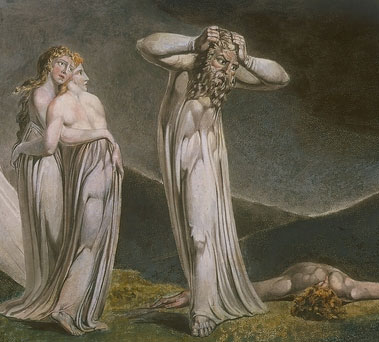
Let’s examine the Biblical record to see for ourselves just what was going on with Lamech.
Note: this article is based on the excellent FAQ on this topic in the forums at biblicalfamilies.org. I believe that a membership is required to view the FAQ.
Here’s the quote in its entirety from Genesis.
16 Then Cain left the presence of the Lord, and settled in the land of Nod, east of Eden.
17 Cain had relations with his wife and she conceived, and gave birth to Enoch; and Cain built a city, and named the city Enoch, after the name of his son. 18 Now to Enoch was born Irad, and Irad fathered Mehujael, and Mehujael fathered Methushael, and Methushael fathered Lamech. 19 Lamech took two wives for himself: the name of the one was Adah, and the name of the other, Zillah. 20 Adah gave birth to Jabal; he was the father of those who live in tents and have livestock. 21 His brother’s name was Jubal; he was the father of all those who play the lyre and flute. 22 As for Zillah, she also gave birth to Tubal-cain, the forger of all implements of bronze and iron; and the sister of Tubal-cain was Naamah.
23 Lamech said to his wives,
“Adah and Zillah,
Genesis 4:16-24
Listen to my voice,
You wives of Lamech,
Pay attention to my words,
For I have killed a man for wounding me;
And a boy for striking me!
24 If Cain is avenged seven times,
Then Lamech seventy-seven times!”
Lamech starts off on the wrong foot with a lot of Bible readers because he is descended from Cain, the brother and murderer of Abel. Now, no one has any control of his or her ancestry. If we are going to apply judgment fairly, then we have to condemn Ruth from Moab who joined the Hebrews because of her love for her mother-in-law Naomi and her marriage to Boaz. Uriah was a Hittite who faithfully served King David in his army.
Second, to the horror of readers, Lamech took two wives, Adah and Zillah. YHVH has been crystal clear on His condemnation of adultery and has taken personal action to prevent adultery from happening (twice with Sarai/Sarah) and punished adultery (David and Bath-Sheba). Moses nowhere recorded in this episode any such action. YHVH’s silence needs to be kept in mind. Now, the question the reader must ask himself or herself is, if Lamech were of the line of Seth, would that make polygyny more “acceptable”? If yes, we are not judging the morality of polygyny itself, but who’s from the right family.
Adah was the first wife and she bore Lamach two sons.
The first son was Jabal who introduced nomadic life (living in tents) and taking care of livestock. A Cainite invented tents and shepherding. Therefore, Abraham, Isaac and Jacob are all in trouble because they themselves dwelt in tents and had herds of various beasts. The second son was Jubal who invented musical instruments. King David is in trouble here because he played on the harp and lyre, which were invented by another Cainite!
Zillah was the second wife and she bore Lamech one son. He invented metal-working and forged bronze and iron implements. As an aside: this was prior to the Flood and the secrets of forging bronze and iron were lost and not rediscovered for centuries. Tools have made farming easier and performing all kinds of tasks. It is true that weapons are a sub-category of tools. Are we all in trouble because we use tools forged by processes invented by a Cainite?
This polygynist Cainite family produced three men who contributed greatly to positive cultural development. Maybe we should apply equal weights and measures in our judgment of this remarkable family?
Now about this charge of murder of which Lamech is accused. He told his wives he killed a man who wounded him and a boy for striking him. There are two ways we can interpret the tone. The first way is that he’s celebrating murder and is proudly telling his wives so. That certainly sounds reasonable when he invokes his ancestor Cain. The other way we can understand his tone is for grief at killing people who hurt him first. That’s arguably self-defense.
Earlier in the chapter, after Cain said that people would kill him to avenge Abel’s blood shed into the ground, YHVH responded that He would protect Cain by a mark.
15 So the Lord said to him, “Therefore whoever kills Cain, vengeance will be taken on him seven times as much.”
Genesis 4:15
Cain, who unrighteously murdered Abel was protected from the avenger of blood by YHVH declaring that vengeance on the avenger of blood would be seven times greater.
Lamech who killed after he was wounded and struck is saying that because he was acting in self-defense, the avenger of blood for the the dead man and boy, would face much greater vengeance, seventy-seven times in fact.
Lamech did not claim that YHVH spoke this word nor did Moses record anything that condemns Lamech. Could it be then that this story records Lamech’s contribution to the legal code that homicide while defending yourself is justifiable?
In the Mosaic Code, there are provisions for killing in self-defense. A Jewish rabbi briefly discusses this. But there are limits set. For instance, killing a thief who broke into the house at night is justified, but not the thief who commits burglary during the day.
2 If the thief is caught while breaking in and is struck so that he dies, there will be no guilt for bloodshed on his account. 3 If the sun has risen on him, there will be guilt for bloodshed on his account—A thief shall certainly make restitution; if he owns nothing, then he shall be sold for his theft.
Exodus 22:2-3
15 ‘You shall not do injustice in judgment; you shall not show partiality to the poor nor give preference to the great, but you are to judge your neighbor fairly. 16 You shall not go about as a slanderer among your people; and you are not to jeopardize the life of your neighbor. I am the Lord.
Leviticus 19:15-16
Now, Leviticus 19:15 is written in the context of relative social power comparing small to great. What if I rewrote the statute thus?
You shall not do injustice in judgment; you shall not show partiality to the polygynist nor give preference to the monogamist, but you are to judge your neighbor fairly.
Have we been judging Lamech unfairly lo these many centuries simply because he is a polygynist? If so, we are guilty of breaking Torah.
 11:3 Restoration