…. then, ‘keep His Covenant and remember His precepts to DO them.’
Got Torah?
(Yeshua/Jesus only offers freedom back into Covenant, not freedom from Covenant…)
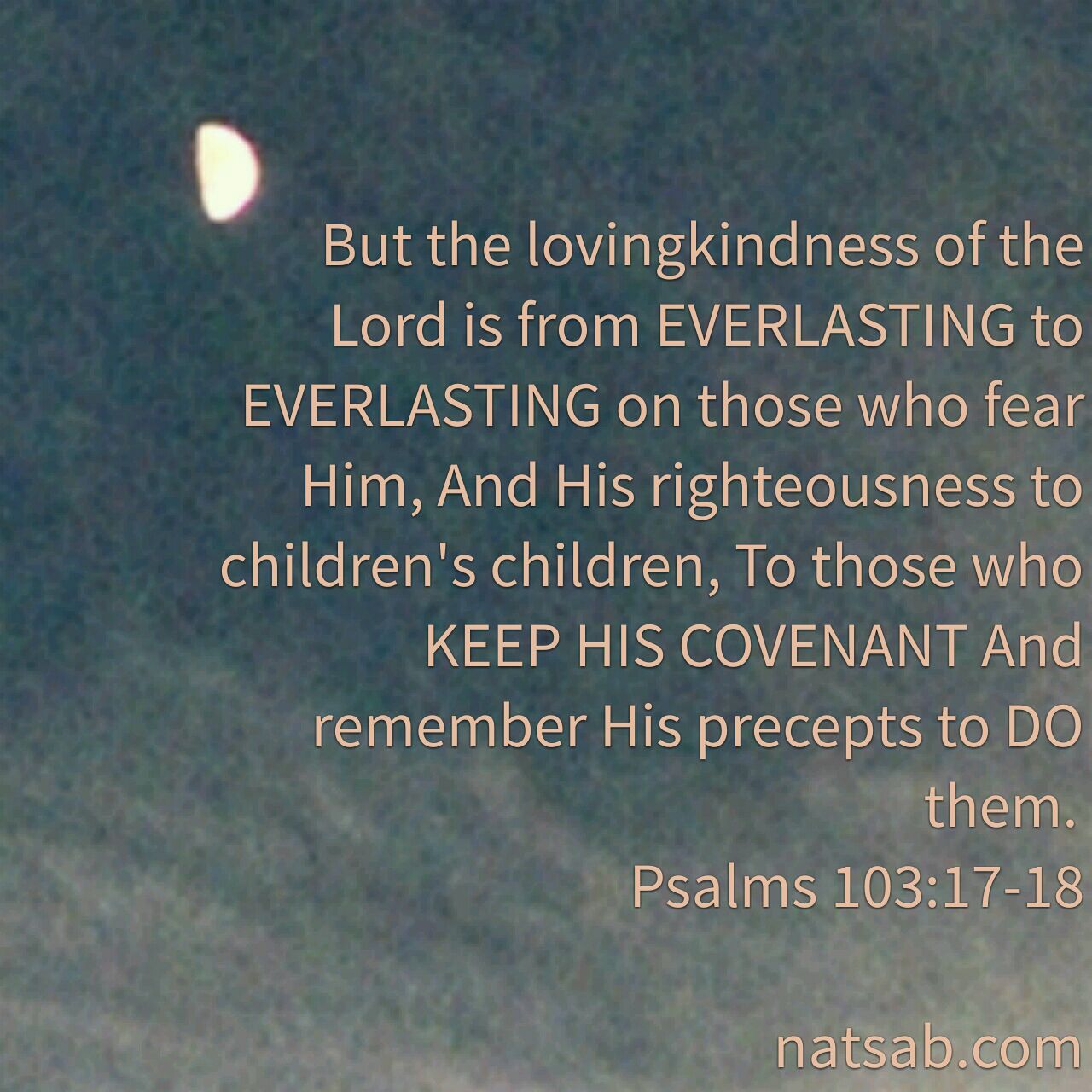
…. then, ‘keep His Covenant and remember His precepts to DO them.’
Got Torah?
(Yeshua/Jesus only offers freedom back into Covenant, not freedom from Covenant…)
Yesterday, I posted a Scripture image from my YouVersion account demonstrating an example of the use of ‘Memra’ from Deuteronomy. We have argued on this blog before for the presence of Yeshua in the Torah, one example of which is the ‘Memra.’ Read up on that to better understand the next few verses.

Certainly, Yeshua, the Memra, stood on Mt. Sinai!
Well, here are a few more ‘Memra’ verses from this portion that are fascinating and again compel us to ask, “When Yeshua (Jesus) says, ‘If you love me, then keep my commandments,’ what are his commandments?” (Answer to the question at the end of the post…)
Picking up with yesterday’s verses, these almost have a story line as they are interspersed through Deuteronomy 26-28,
Deu. 26:16 “This day the Lord your God commands you to do these statutes and ordinances. You shall therefore be careful to do them with all your heart and with all your soul. 17 You have today declared the Memra de Yeya to be your God, and that Continue reading “A few more ‘Memra’ verses in this portion….”
Multiple points made in yesterday’s post about professor Daniel I. Block’s essay have been running through my head. The major one is one I’ve pondered before but am again relishing.

Simply, the truth recorded in Torah has not and cannot change. When יהיה said to keep His feasts forever (4x in Lev. 23), that is unchanging truth. When יהיה said to keep the seventh-day Sabbath forever (Ex. 31:16-17), that is unchanging truth. It can’t change, else He is a liar, and He cannot lie (Titus 1:2).
Therefore, if someone tells you these have changed, that person is lying. Period. (Now, they may be doing so in ignorance as I once was, but it is still lying.) Gently correct them with this thought: Does (or, can) God lie? Concerning the Torah, He says it is truth and everlasting righteousness.
http://bible.com/100/psa.119.142.NASB
Shabbat Shalom!!
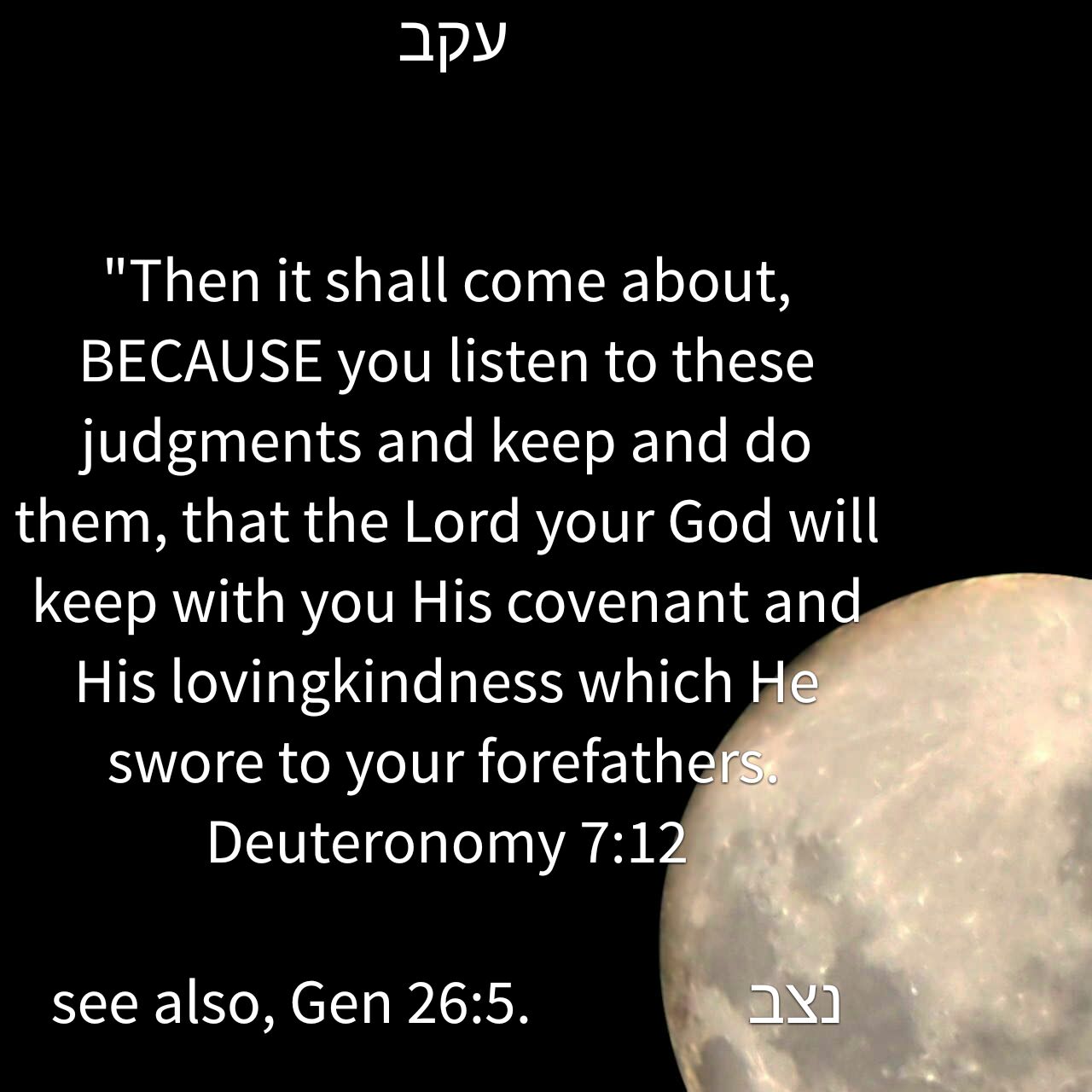
Ephraim and Rimona Frank’s Torah study notes this week focused on the word עקב ekev , meaning ‘because.’ The same word is used in Genesis 26:5…”because עקב Abraham kept…” The same letters mean ‘heel’ and are the root of Ya’acov, meaning ‘heel grasper.’
Pondering how the ‘heel-because’ connection directly relates to ‘walk.’.
“Keeping and doing” is our ‘walk’ and the ‘because’ for Yehovah’s ‘keeping and doing’ of His Covenant.
The Psalms are clear that David, a man after God’s own heart, delighted in Yehovah’s instructions (Torah). If we desire the heart of God, should we do any differently?
Put another way, David understood that righteousness was obedience to God’s Instructions, but the Church teaches that obedience is bondage and an affront to the righteousness of Messiah. Who do we believe, David and the Son of David (Mark 10:17-22), or traditions of men?
David said, “I DELIGHT to do thy will…Your Torah is within my Heart.”. Do we delight in His Torah, or do we call ‘good’ ‘evil?’
Selah.

How many of us have memorized this verse?
Let the words of my mouth and the meditation of my heart
Be acceptable in Your sight,
O Lord, my rock and my Redeemer. Psalm 19:14
Many of us. In fact, I know many pastors who use this as part of their prayer before beginning a sermon.
Having memorized this verse, it lept out at me as I was doing part of my ‘Who is…’ series. There is a clear declaration of Yahweh as the Redeemer, but what grabbed my attention even more was the reference. This comes from Psalm 19!!!
Oh. You don’t know why that is so important? Continue reading “…the words of my mouth and the meditation of my heart…”
 11:3 Restoration